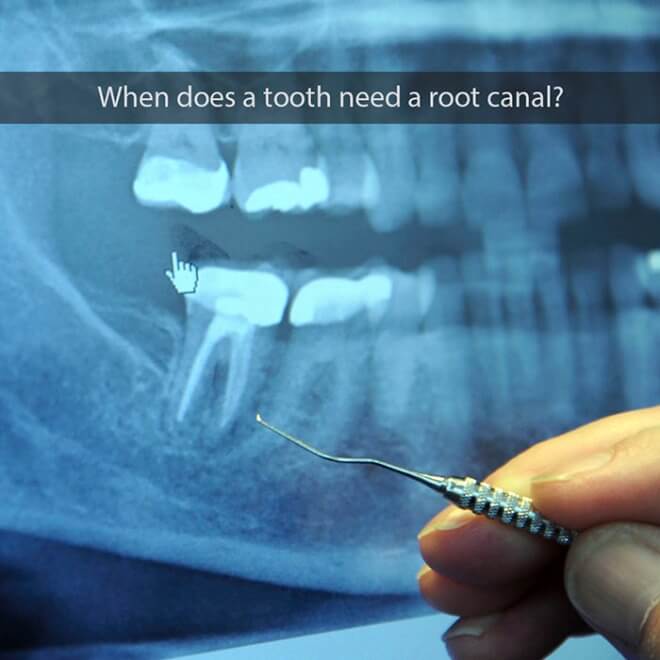
TEETH ARE ALIVE, and may need special procedures like a root canal. Just like every other part of the body, they are susceptible to infection. Whenever an infection becomes severe enough, the tainted part has to go or else all the surrounding tissue will be compromised as well and the patient’s life will be at risk! That’s where a root canal comes in.
What Is A Root Canal?
Root canals are a way of getting rid of the infection in a tooth without getting rid of the actual tooth. A root canal won’t save your tooth—by the time you need one, it’s too late for that, but it will allow you to keep it.
If you need a root canal, Dr. Hancock will drill into the tooth to reach the infected pulp at its core. Next, the pulp is removed, leaving the tooth hollow. After the space is flushed out, the root is filled with sealer and the crown with cement, and the whole tooth is capped off with an artificial crown. This procedure ensures that no more bacteria can get inside the tooth and minimizes the chances of the tooth breaking.
To get a better understanding of what’s involved in root canal treatment, check out the video below:
When Do You Need One?
The way teeth become infected is through decay, cavities, or cracks from an injury, which means it’s usually an avoidable problem. If you’re brushing and flossing properly, your teeth are unlikely to reach a level of decay that allows bacteria to reach the living dental pulp inside them. However, some people are genetically more susceptible to tooth decay.
Infection can lead to an abscess at the tooth’s root or to death of the pulp. If you have tooth decay extensive enough to require a root canal, you’ll probably be experiencing significant pain in and around the infected tooth. With an abscess, there will also be swelling and inflammation. Tooth pain alone isn’t always a sign of an infection, but it’s always worth checking out to make sure.
Other symptoms of tooth infection include:
Temperature sensitivity
Sensitivity to pressure (particularly when chewing)
Fever
Swollen lymph nodes under jaw
Rush of foul-tasting fluid and pain relief if abscess drains
You’re In Good Hands
Dr. Hancock specializes in endodontic therapy, so if you have been referred to our practice, you can trust that you’ll receive the best care possible. In addition to his traditional dental training, Dr. Hancock spent three years of advanced training to become an expert.
Keep Those Teeth Healthy
Remember that preventing the problem is always better than needing a solution! Healthy teeth don’t need root canals, so keep brushing twice a day and flossing daily and cut back on sugary drinks so that your teeth will stay healthy!